
A whiff of spring
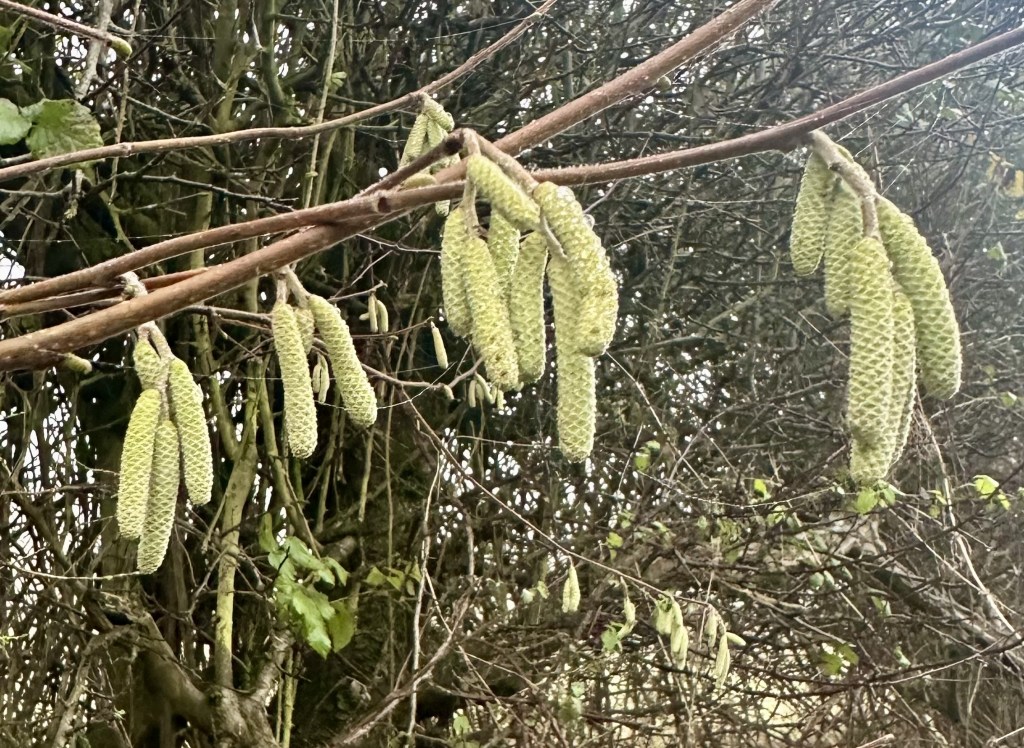
It was one of those December walks. The type of walk where the air is filled with a weedy drizzle, where the roads are made slippery and sludgy with mud and all the sounds are muted. Plus my trousers were too tight from too much food. Everything was grey and miserable.
I think we must have an inbuilt sense of ‘You’ve had enough of this misery – here’s something good to look forward to‘ in our makeup because I suddenly spotted catkins and my perception of the world changed instantly.
That one glance of a fresh green swept with it the promise of spring – snowdrops, crocus, green shoots and unfurling leaves. It brought hope.
Life can be rotten. There are vast swathes of life that we cannot change however many self-help books we read or green smoothies we drink. We are tossed and thrown around on the sea of life and we just have to make the best of it – but sometimes we run out of steam. I had run out of steam. It sounds trite, but the catkins promised me that better is to come. The year turns, the leaves return and there are actually days where the air temperature is warm on your face. Imagine that! I find it’s very easy on a diet of bad news to lose hope. When I lose hope, I lose a bit of myself too. I’m not me anymore and I really do not like the person that I become.
I love the fact that nature is relentless. It doesn’t care what you think or what your government thinks. Your self-important rules do not matter in the slightest because nature will do what it wants to do, when it feels it is the right time to do it – and it’s wonderful. It’s a certainty in an uncertain world and those catkins, to me, are a harbinger of hope of the good that is to come.
I’m writing this looking out on the garden that seems as if it has been painted from palette entitled ‘Murk and Misery,’ but then I look at the photo of the catkins from last week and I know better days are coming.
Not just a bird
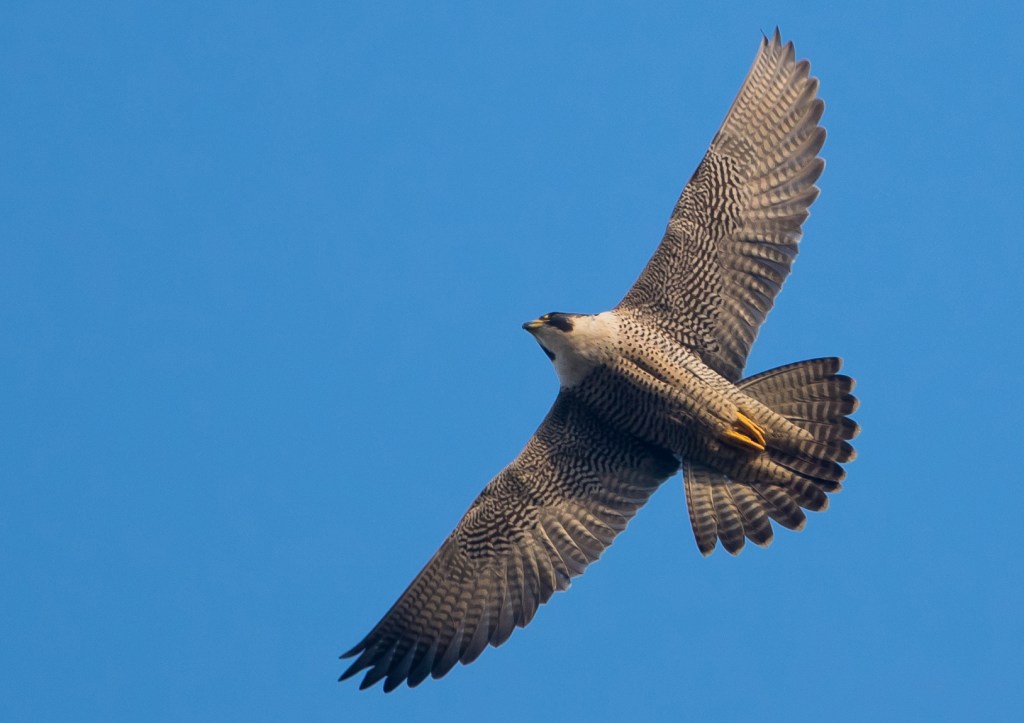
I’m lucky enough to work in a building next to a spire that until Thursday had been home to a pair of peregrine falcons. The tiercel, the male falcon known as Norm, is still there but sadly the female, GA, named from the letters on her leg ring, collided with a stationary car on Thursday morning and died that night.
These things happen – everyone knows this. Life is fragile, even for an apex predator at the top of her game, but for many people, myself included, GA was not just a bird. To me she was my daily companion, my link to the outdoor life that I love so much. I could be working in my office and a cacophony of screeching would begin outside. It took a stronger will than I possess to resist and so I would walk out into the car park and look up, just to see what she was up to. I say ‘she’ but the tiercel could be just as vocal – however GA was spectacular in her screeching. Barely a working day would go by when I would not mutter ‘hello’ to her as I crossed the car-park. My lunch would often be taken in the Cloister garth, watching the peregrines and their young whizz, arrow-sharp and graceful, into the sky above. Looking up at the sky filled only with that silhouette, I could have been standing in the middle of a fen, far away from the city, and I was grateful for that.
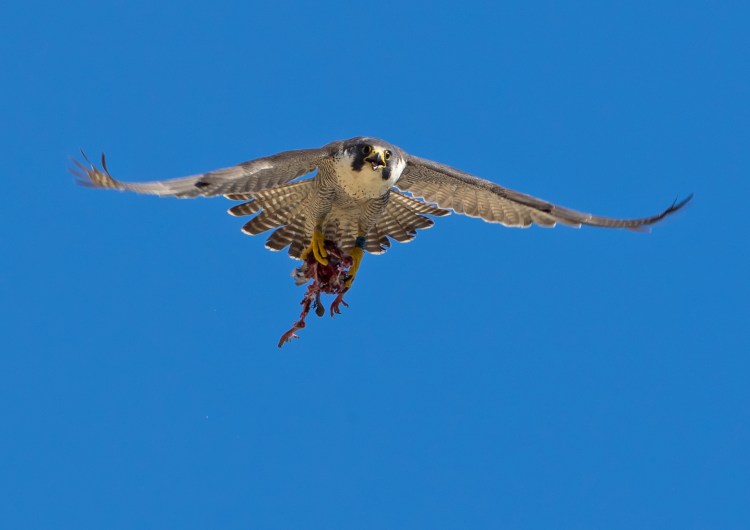
In meetings a sometimes welcome distraction would be an outraged screech followed by the flash of a shadow across the floor as she passed over the skylight intent on defending her territory and family.
I know that some of us tend to anthropomorphize animals and birds, but GA was such a fierce, feisty, utterly breathtaking creature that you could not fail to pin a personality on her. I will miss her and our one-sided chats very much. Her legacy however is something to be celebrated by nature lovers because I firmly believe that this bird was unknowingly an inspiring ambassador for wildlife.
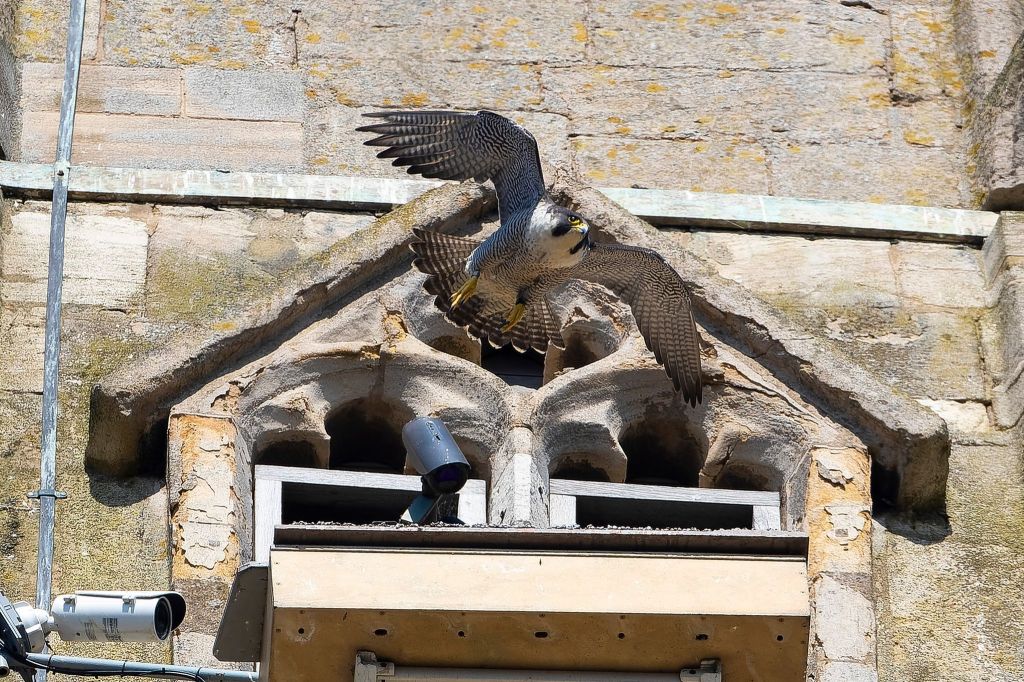
Many, many people followed the ups and downs of the peregrine family on social media. They reported having the webcam on all day whilst working, just to keep an eye on the birds, and without knowing it was happening, they would be sucked down the rabbit hole into the wilder side of life.
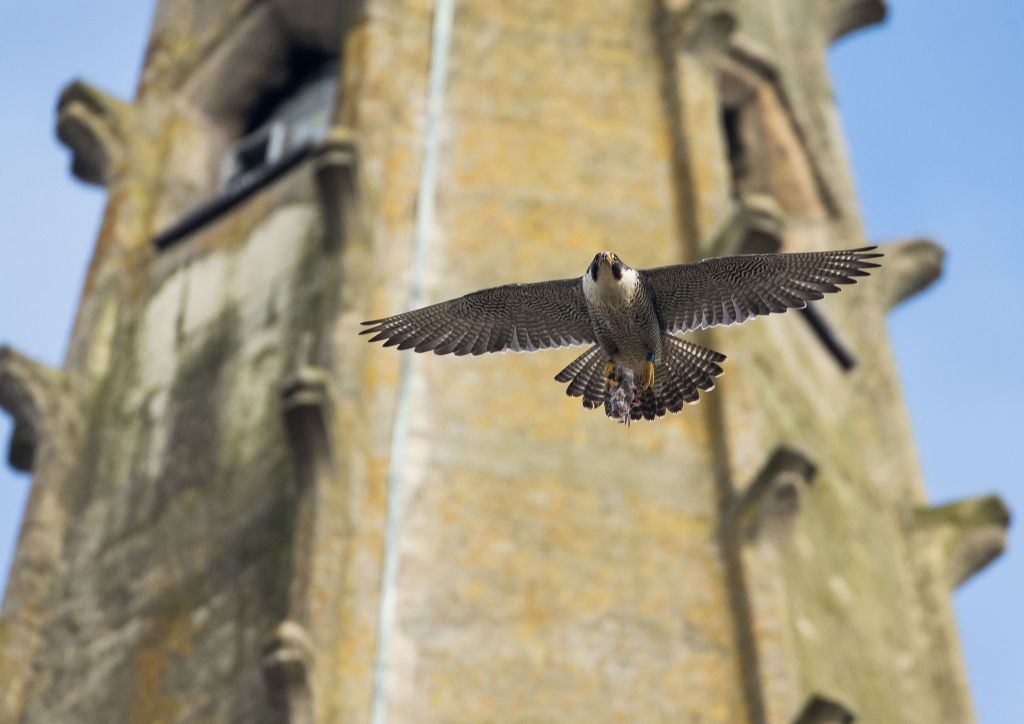
The message boards were full of photos of half a leg, some entrails or a bit of a wing in the scrape and people took great pleasure in identifying the prey by the few remaining feathers or feet. This in turn led to looking at the habitats that the prey would have been taken from, mapping out the possible sites that the teal or mallard would have been picked up from, and seeing how far the pair may have flown to catch their food. People could not fail to be drawn in and would never have thought that they would become ‘birders’ – but the fascination that the peregrines hold over people is irresistible. Members on the boards could tell where the prey may have come from, which habitat it preferred, was it migratory or a constant Norfolk bird. Whilst Norm is held in total affection, GA was admired, loved and inspired. She taught people that nature was cruel, harsh but fascinating. That falcons are fighters, survivors and are to be admired. No wildlife programme could have had a better ambassador. Standing under that screeching shadow as a lump of pigeon drops near you in the Cloister after a bodged food pass is not something that you forget. GA has inspired many, many new naturalists and this is a wonderful legacy.
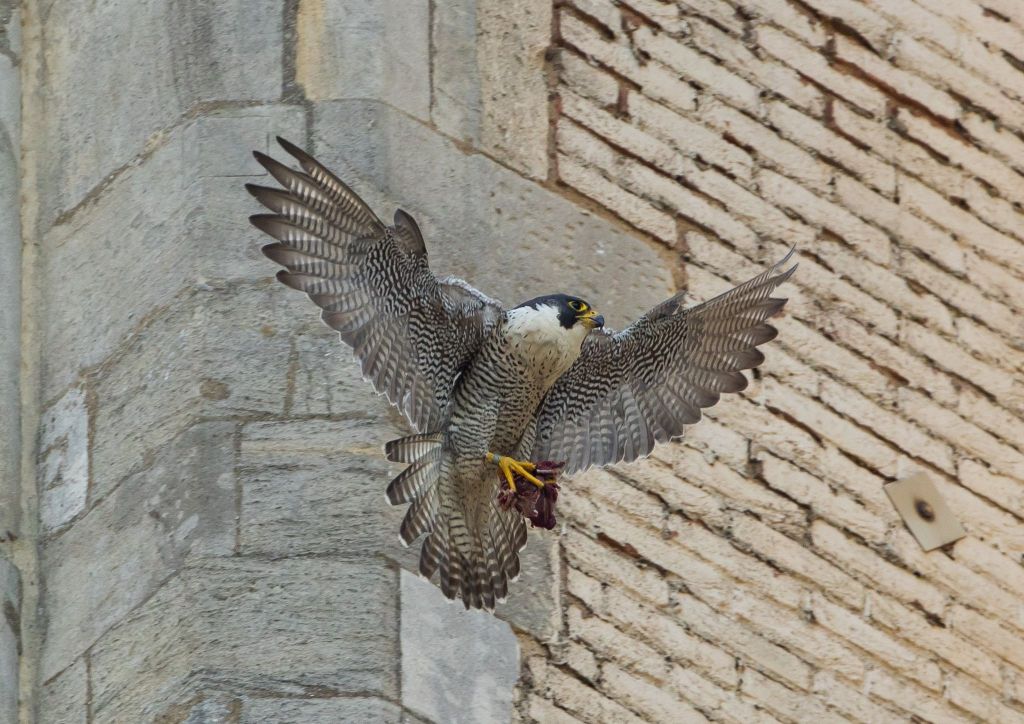
I cannot help anthropomorphizing her final day. I would much rather she left the way she did, with people who respected and cared for her, fighting to save her life, rather than plummeting from the sky after a skirmish and falling injured to the ground to die alone in a distant field somewhere. I know that this is sentimental and not relevant to her life at all, but it’s how I feel. She deserved dignity at the end as she was the most dignified, proud, fierce bird and leaves a legion of new wildlife champions in her memory.
And personally, my days will be far quieter and lonelier without being able to glance up at the hunched shape on a crocket and muttering, ‘Hello lovely’ as I pass under that steely gaze. A new female will move in – that is how the natural world operates, but in the meantime the Queen is dead, long live the Queen.
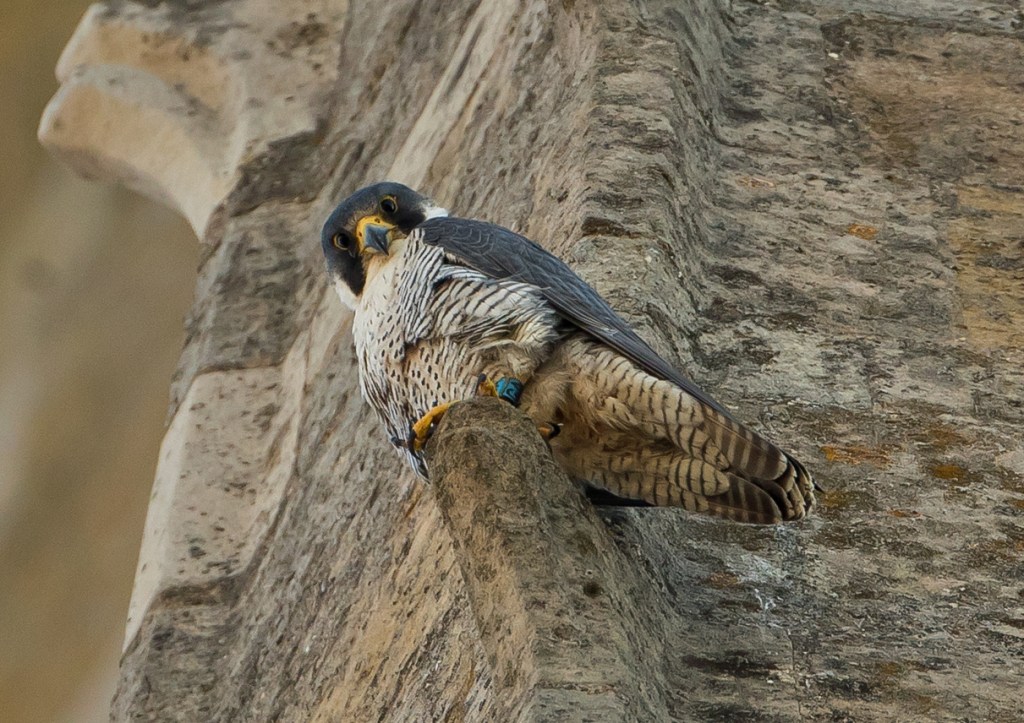
Many, many thanks to Chris Skipper for permission to use his wonderful photos. Together with his wife Kim, they have taken some of the most fabulous photographs of these birds and the falcons could not have better champions.
Seasons
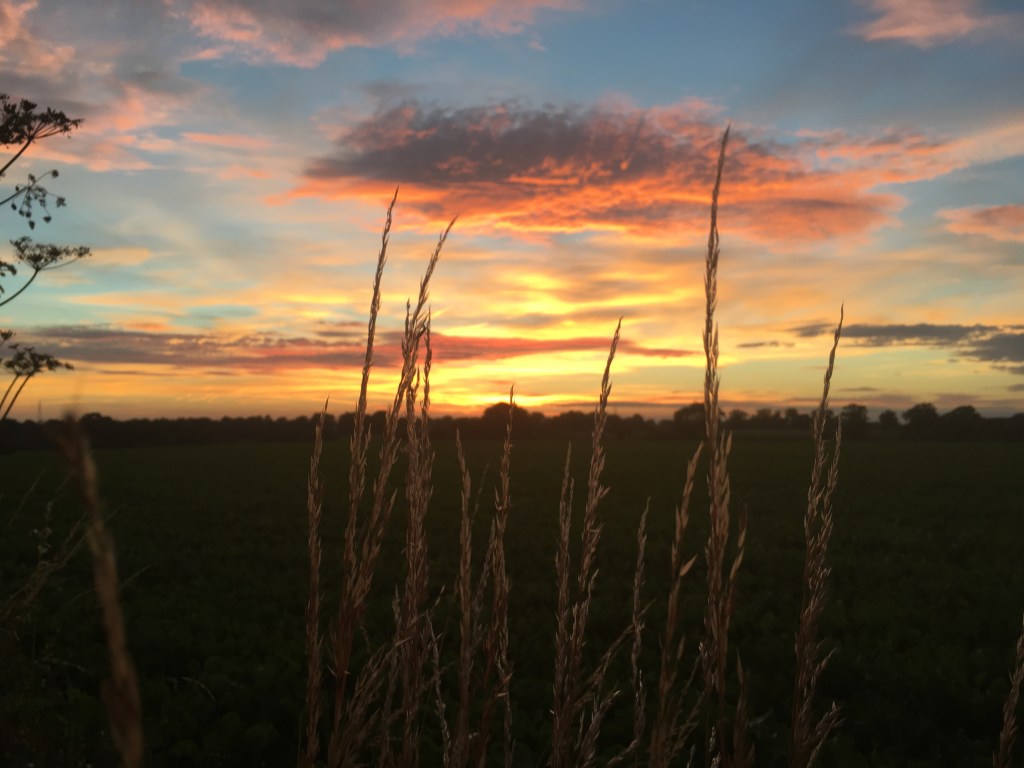
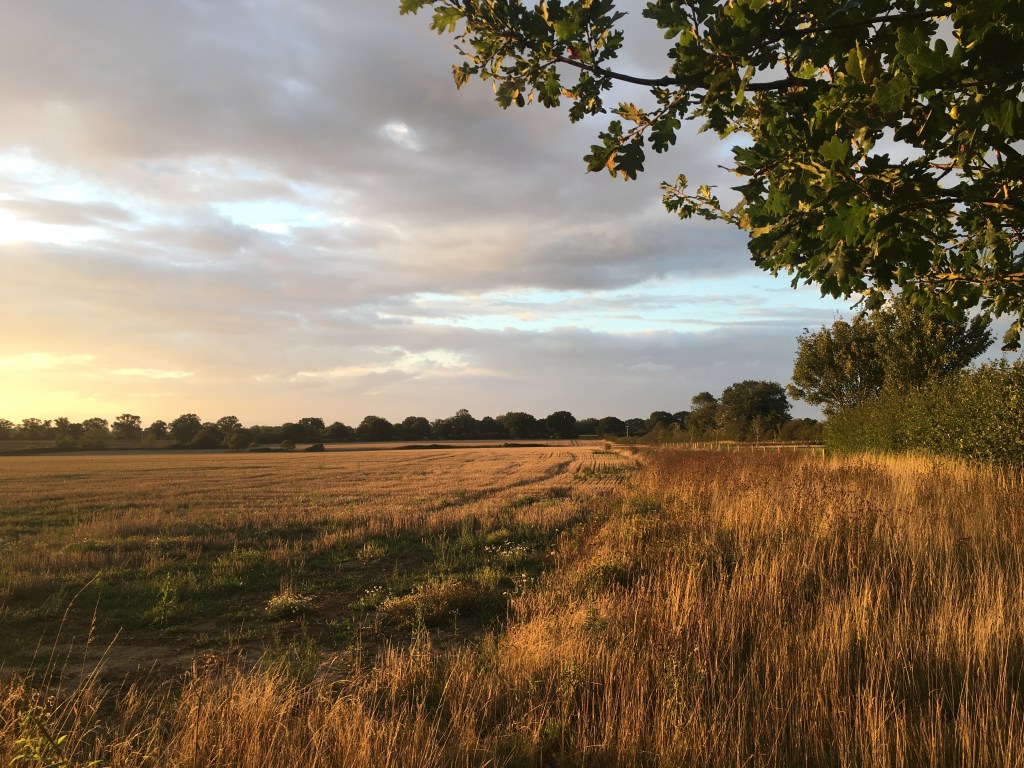
Living where I do, there is an real connection with the seasons. Not only do you feel the changes in temperature acutely but very often you can smell and hear the seasons too. There’s that wonderful moment in the summer when the waft of newly harvested fields drifts into the house, or in winter, when suddenly the world outside becomes very still and silent as the snow carpets the fields.
There’s real joy in standing in the garden in August, watching for the Perseids to whizz past, or finding the first brightly coloured toadstool on a walk. It’s not all skipping around gaily however. Dead rabbits from hemorrhagic disease are to be found. Fields are sprayed with manure, muntjacs stand just outside your window, barking obscenities at your house in the early hours of the morning. But the rhythms are there and are found in the patterns in the fields and they bring a real connection with passing time and of those who have gone before on this land.
The first guest writer on nature is Kathy Blake (@reephambird). Kathy is secretary to the Canaries Trust, a stormchaser, volcanophile and lover of wildlife.
The Heralding of Autumn
By guest naturalist Kathy Blake (@reephambird)
Summer’s nearly over but don’t despair.
There’s been a distinct ‘autumn feeling’ waking up the last couple of weeks. It’s always difficult to put your fingers on exactly what that is.
The increasingly shorter daylight hours lead to a slight chill and often an associated heavy dew first thing in the morning which make you think ‘uh oh’.
But it’s also what’s not there. The silence shows that our noisiest summer visitors have nearly all gone. Screaming swifts are such a part of and English summer evening, we’re not always aware of them. I don’t know why they do this. I’m told by learned friends they are just talking to each other. Well they certainly don’t mind you listening do they?
You don’t always notice at first when it stops. Then suddenly the penny drops and you realise it’s awfully quiet.
The ‘first’ of anything is always exciting to those of us who enjoy the seasons. I‘m one of them and eagerly wait for the first snowflake with the same excitement I did as a child.
But my favourite ‘first’ is seeing the first swallow. It brings with the hope of rebirth, of green shoots, baby birds, new life.
The trouble with ‘last’ though, is that you don’t know it at the time. One day the swifts are there, the next they’ve gone. No chance to say goodbye.
Of course, they’re not alone. Some of our summer visitors like the cuckoo have already left. The swallows, house martins and chiff chaffs will soon be joining them.
Time to look forward then to the autumn and some new faces. It won’t be long before the great flocks of redwings and fieldfares are foraging in our harvested fields again. Go outside on a quiet night and you may hear them call overhead as they arrive in Norfolk. Confession time – I sometimes answer ‘Welcome back’. (My neighbours are used to it).
Venture up to the coast and you may see flocks of adorable snow bunting, the sweetest and most trusting little bird. You sometimes have to wait until they move. They’re are cunningly camouflaged against the shingle banks, and virtually impossible to see them unless they take flight. Keep an eye nearby too though. They are not used to humans and occasionally you can walk right up to them.
If you don’t mind jostling for position among some extremely expensive long lenses, there will occasionally be an unusual winter visitor to see too, probably blown off course by the autumn winds. Because of its position sticking out into the North Sea the North Norfolk coast is a prime candidate for the odd vagrant. I have to hold my hands up and say I shamefully have increased my carbon footprint as a result of the opportunity to see a ‘lifer’. The annual, usually fruitless waxwing chase contributes too. My bad.
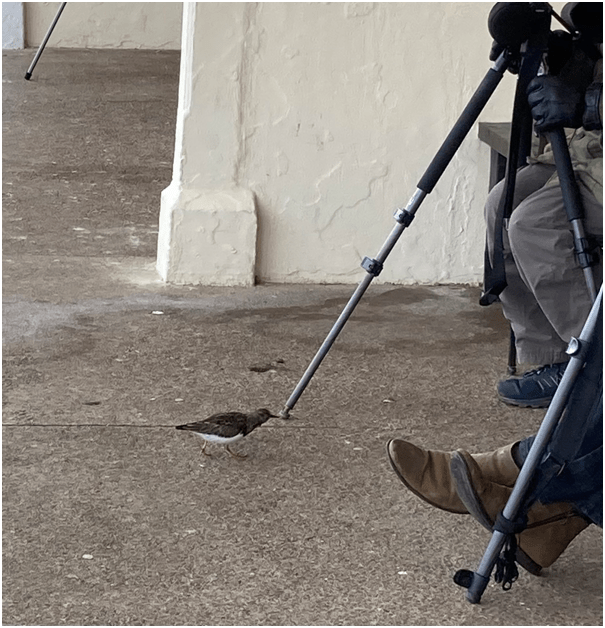
So, don’t be sad for what’s gone. Be glad for what’s ahead. If you’re fed up with ‘indoors’ after 18 months of lockdown, wait for a strong easterly, grab some warm clothes and head off to Sheringham seafront. Sit yourself in one of the shelters with a pair of binoculars or scope and wait. They will come to you. Sometimes quite literally like this turnstone.
Early Summer
The trees are in full leaf, the wheat and barley is ripening and the skylarks are desperately trying to draw you away from their nests. The bright yellow of the oil seed rape is everywhere and deer-paths crisscross the fields and verges. It is a lovely time of year.
Here are the skylarks, singing over the oil seed rape during May this year.
 Norfolk Notes